
Cooking for one or two sounds easier than cooking for a family. Strangely, it doesn’t always feel that way.
When you’re cooking for a family, somehow it feels worthwhile to prepare several dishes and make a proper meal. But when there are only one or two people at home, the motivation can disappear surprisingly quickly.
There’s nothing wrong with eating out. A meal with family or friends is one of life’s pleasures.
But when eating out becomes the everyday solution simply because cooking for one or two feels like too much trouble, the cost can add up. And depending on what we choose, meals prepared outside the home can contain more salt, sauces, oil or seasoning than we would normally use ourselves.
The other extreme isn’t very appealing either: spending an hour preparing several dishes and creating a sink full of washing-up — for two people.
Fortunately, those aren’t our only choices.
There is a comfortable middle ground: simple home cooking that is enjoyable, economical and good for us.
1A Simple Meal Can Still Be a Good Meal
A home-cooked dinner doesn’t need three dishes and a soup.
Some days, dinner might simply be an omelette with vegetables and wholegrain toast. Another day it could be rice with vegetables, egg and some chicken, beef, fish or tofu.
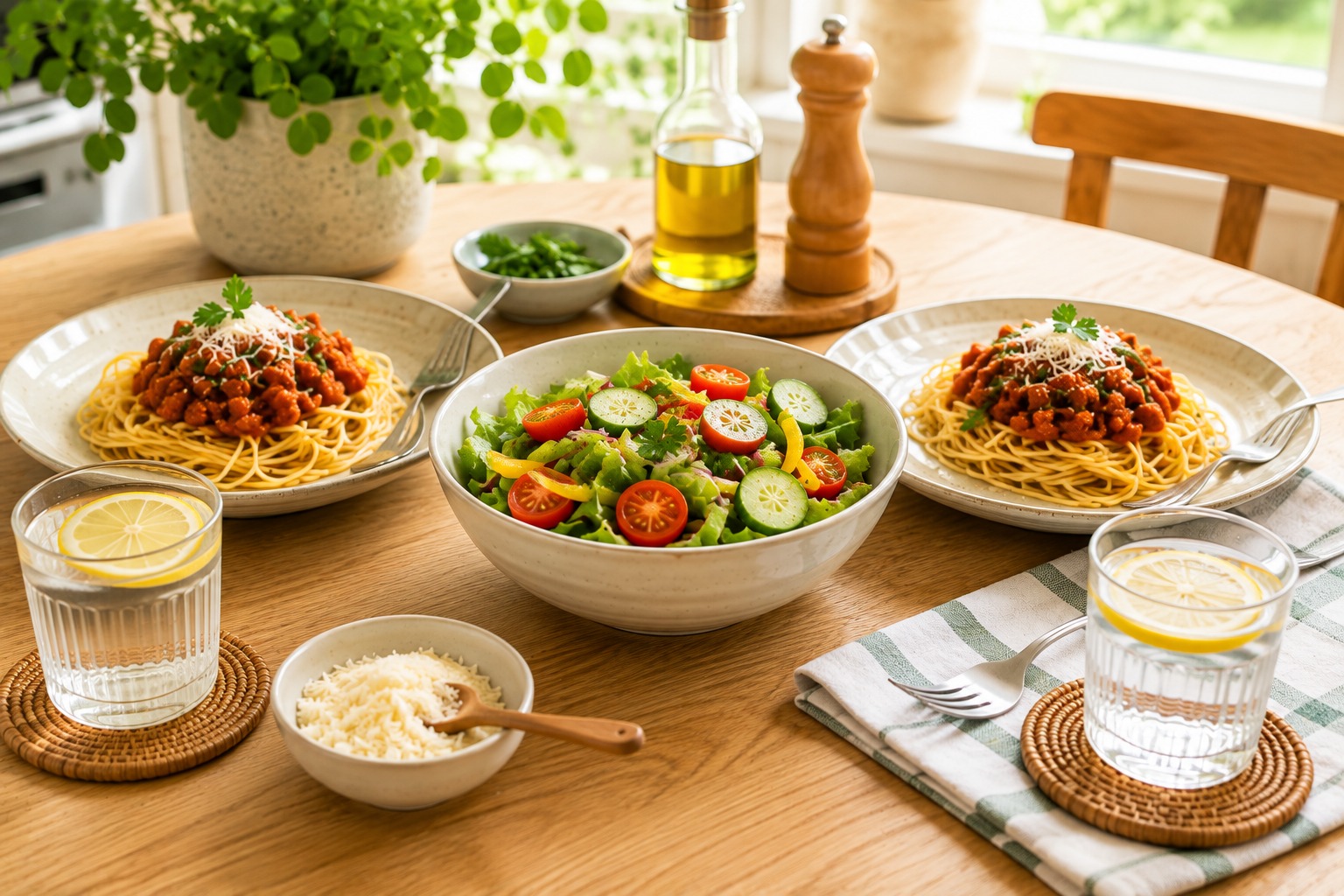
Spaghetti bolognese with a simple salad can make an easy, satisfying meal. So can meatballs with vegetables and pasta.
A bowl of homemade soup with vegetables and some protein can be a meal too.
What matters isn’t how many dishes are on the table. It’s putting together a reasonable variety of nourishing foods.
Simple doesn’t have to mean unhealthy.
2Buy Ingredients That Can Do More Than One Job
Cooking for one or two becomes much easier when the ingredients in the fridge aren’t bought for only one particular recipe.
Eggs can become breakfast, an omelette, a sandwich filling or part of a quick fried rice.
Leafy vegetables might be stir-fried tonight, added to soup tomorrow or cooked with eggs for another meal.
Chicken can be served with rice one evening and used in a sandwich, salad or soup the following day.
Minced beef is equally versatile. One pack could become spaghetti bolognese, meatballs or another simple beef dish.
Before putting something into the shopping trolley, it can be useful to ask:
That little question can help reduce food waste — and those emergency trips to the supermarket because there’s “nothing to cook”.
3Cook Once — But Don’t Eat the Same Meal Twice
Cooking a little extra makes sense.
Eating exactly the same dinner three nights in a row? Perhaps not quite so exciting. 😄
Instead of thinking of leftovers as another identical meal, think of them as the beginning of the next one.
Extra chicken can become tomorrow’s sandwich or salad.
Leftover rice can become vegetable-and-egg fried rice.
Cooked vegetables can go into an omelette.
A homemade beef bolognese can be served with spaghetti tonight, then used with a baked potato and vegetables another day.
Meatballs are another useful cook-ahead option. Make enough for more than one meal and keep a portion for a busy day.
Cook once, change it around, and tomorrow’s dinner is already halfway done.
4Make Supermarket Offers Work for You
Cooking for one or two doesn’t mean we should always buy the smallest packet.
Supermarket promotions can offer very good value — especially for ingredients we regularly use.
If minced beef is on a good offer, for example, buying the larger pack may make perfect sense. Some can become bolognese, some meatballs, and the rest can be divided into smaller portions and frozen for another day.
The same idea works for chicken, fish and other foods that can be portioned and stored.
The important question is:
If the answer is yes, take advantage of the offer.
If half of it is likely to be forgotten at the back of the fridge, it wasn’t really a bargain after all. 😄
Good value isn’t necessarily buying less. It’s buying well and using what we buy.
5One Bigger Purchase Can Become Several Meals
Sometimes buying something larger can actually make cooking for one or two easier.
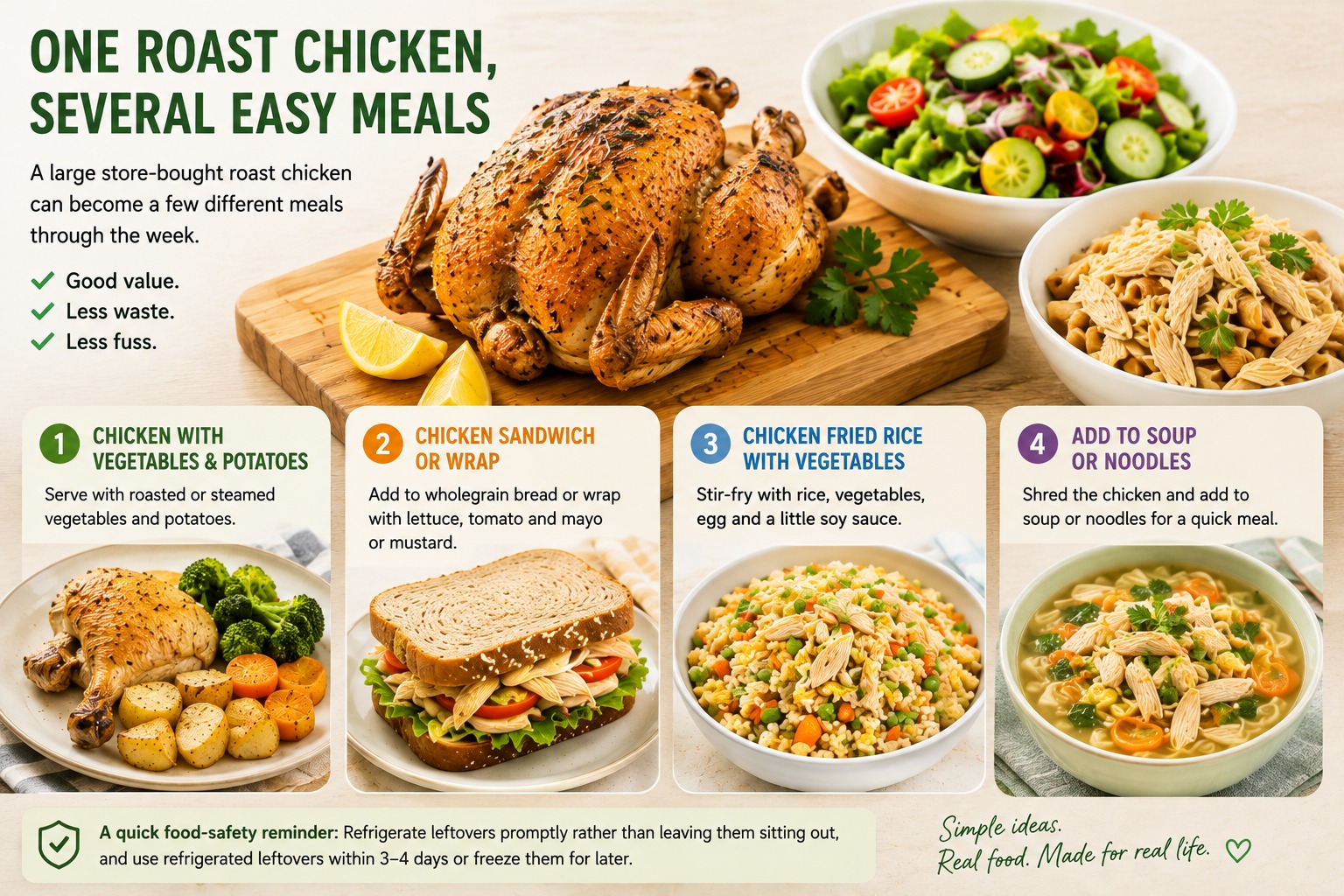
A large store-bought roast chicken is a good example.
Have some with vegetables and potatoes or rice for the first meal.
The remaining chicken can become sandwiches or wraps with salad, chicken fried rice with vegetables, or be added to soup or noodles.
If there’s more than you’ll use soon, portion some for the freezer.
Instead of looking at the whole chicken and thinking, “That’s far too much for two people,” think of it as an ingredient for several different meals.
Buying more isn’t wasteful when we have a sensible plan for using it.
6Keep a Few “I Don’t Feel Like Cooking” Meals
We all have those days.
You open the refrigerator, stare inside for a while and somehow hope dinner will assemble itself. 😂
This is when having a few easy options at home really helps.
Eggs, bread, vegetables, rice, noodles, tofu, chicken, fish or some minced beef can become the basis of a quick meal without needing an elaborate recipe.
Better still, imagine finding a portion of your own bolognese or meatballs waiting in the freezer. Cook some pasta, add vegetables or a simple salad — dinner is practically done.
It helps to have two or three meals you can make almost without thinking.
An omelette with vegetables and toast. Rice with vegetables and egg. A quick soup with vegetables and protein. Spaghetti with homemade bolognese. Or a simple sandwich with a good filling and some vegetables on the side.
Nothing complicated. Just decent everyday food.
7Let the Freezer Do Some of the Work
The freezer can be particularly useful when cooking for one or two.
If you make soup, curry, stew, bolognese or another dish that freezes well, portion the extra before putting it away.
Instead of one enormous container that has to be dealt with later, you have smaller portions ready for another meal.
Larger packs of ingredients bought on promotion can also be divided into useful amounts before freezing.
That way, a good supermarket offer becomes genuinely useful rather than simply filling the freezer.
A little organisation after shopping can save quite a bit of effort later.
8Eating Out Should Still Be Enjoyed
Eating well isn’t only about what’s on the plate.
Food is also enjoyment, culture, conversation and companionship.
So yes — go out for lunch with friends. Try the new restaurant. Enjoy the family dinner.
The point isn’t to avoid eating out.
It’s simply to recognise the difference between:
and
“Let’s eat out because cooking for two seems too troublesome.”
One is part of enjoying life.
The other can become an expensive habit — and often all we really needed was an easy dinner waiting at home.
When You Don’t Know What to Cook
Forget about searching for an elaborate recipe. Start with something simple:
It doesn’t have to be perfect. It just needs to be a satisfying everyday meal that you’re happy to cook — and happy to eat.
Today’s Small Step
Before your next grocery trip, look in the refrigerator, freezer and cupboards first.
Then check the supermarket offers and choose a few ingredients that can each work in more than one meal.
If something you regularly use is genuinely good value, buy enough to take advantage of the offer — provided you have a plan for using or storing it.
You may find yourself spending less, wasting less and wondering “What shall we eat tonight?” a lot less often.
A Thought to Take With You
Cooking for one or two doesn’t have to mean choosing between an elaborate home-cooked dinner and eating out every night.
Somewhere in between is a much easier way to eat:
Buy what you’ll use. Make good value work for you. Cook what you enjoy. Keep it simple.
And save “Let’s eat out tonight!” for the days when you actually want to. 😄
Trusted Sources
Health note: This article provides general food and lifestyle information only and is not personalised medical or dietary advice. Individual needs differ. If you have a medical condition, food allergy or dietary restriction, seek advice from a qualified healthcare professional.